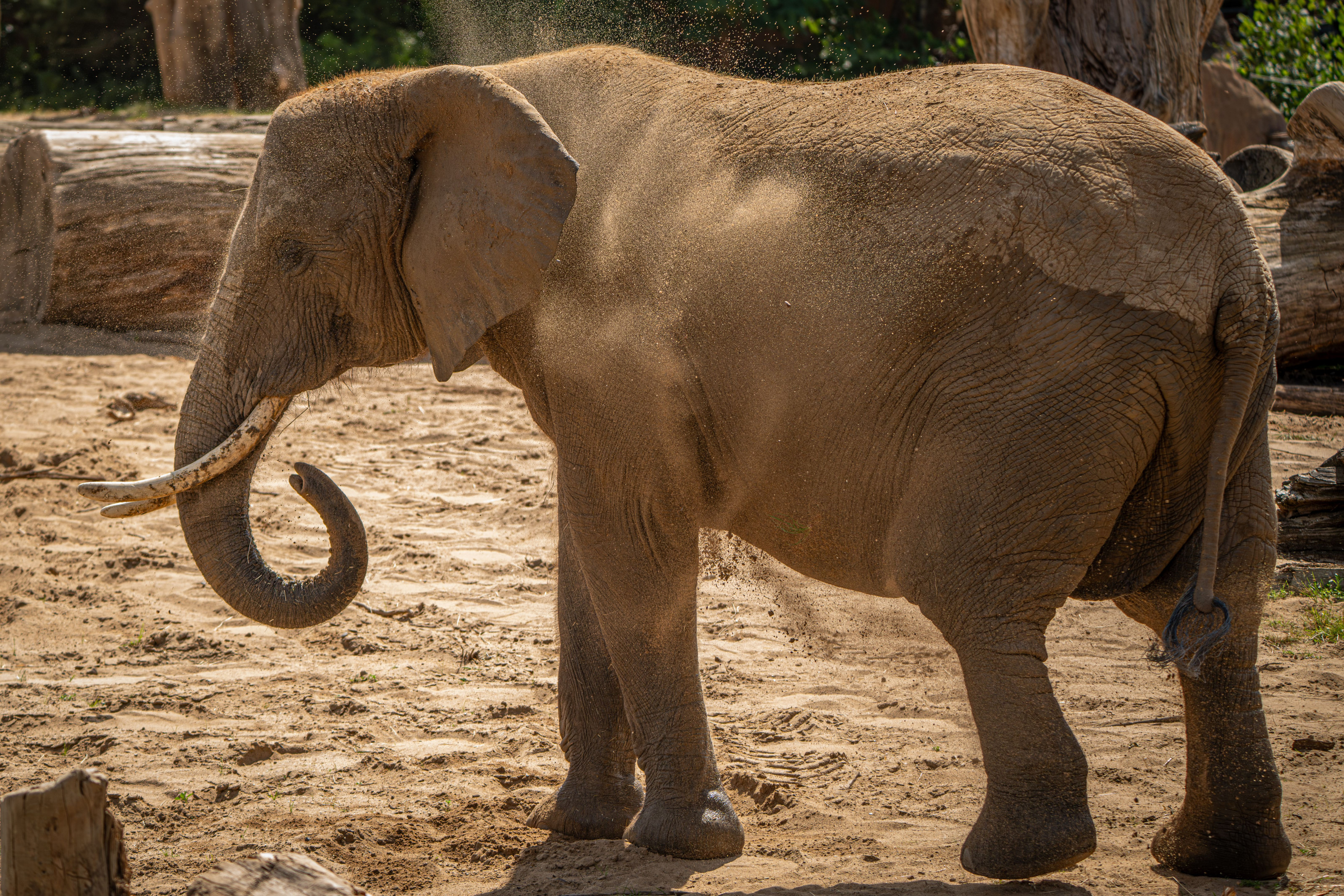
Tsavo East is vast — 13,747 square kilometres, one of Kenya’s largest protected areas — and it looks the part: dry, open, red-dust country crossed by the Galana River, one of the few permanent water sources in an otherwise arid landscape. Elephants here wallow in the red volcanic soil and come out the colour of the ground itself, a look unique enough that Tsavo’s elephants are sometimes called the ‘red elephants’ as a matter of simple description rather than marketing.
Lugard Falls, less a waterfall than a set of narrow, fast rapids where the Galana forces through a rock channel, and Mudanda Rock, a whaleback outcrop with sweeping views over a seasonal waterhole, are the park’s two standout landmarks. Aruba Dam, built across a Galana tributary, concentrates wildlife dependably enough to be worth a dedicated stop on any game drive route.
Because of its sheer size, only part of Tsavo East is open to general tourism, which keeps vehicle density low even in busy months. The bird list runs past 500 species, a genuinely serious number for anyone travelling with binoculars as well as a camera.
Two to three nights is standard, often paired with Tsavo West given the shared border, or treated as a lower-key alternative to Amboseli for travellers wanting elephants without the crowds.
Fees and rules in Kenya's national parks are set by the Kenya Wildlife Service.