
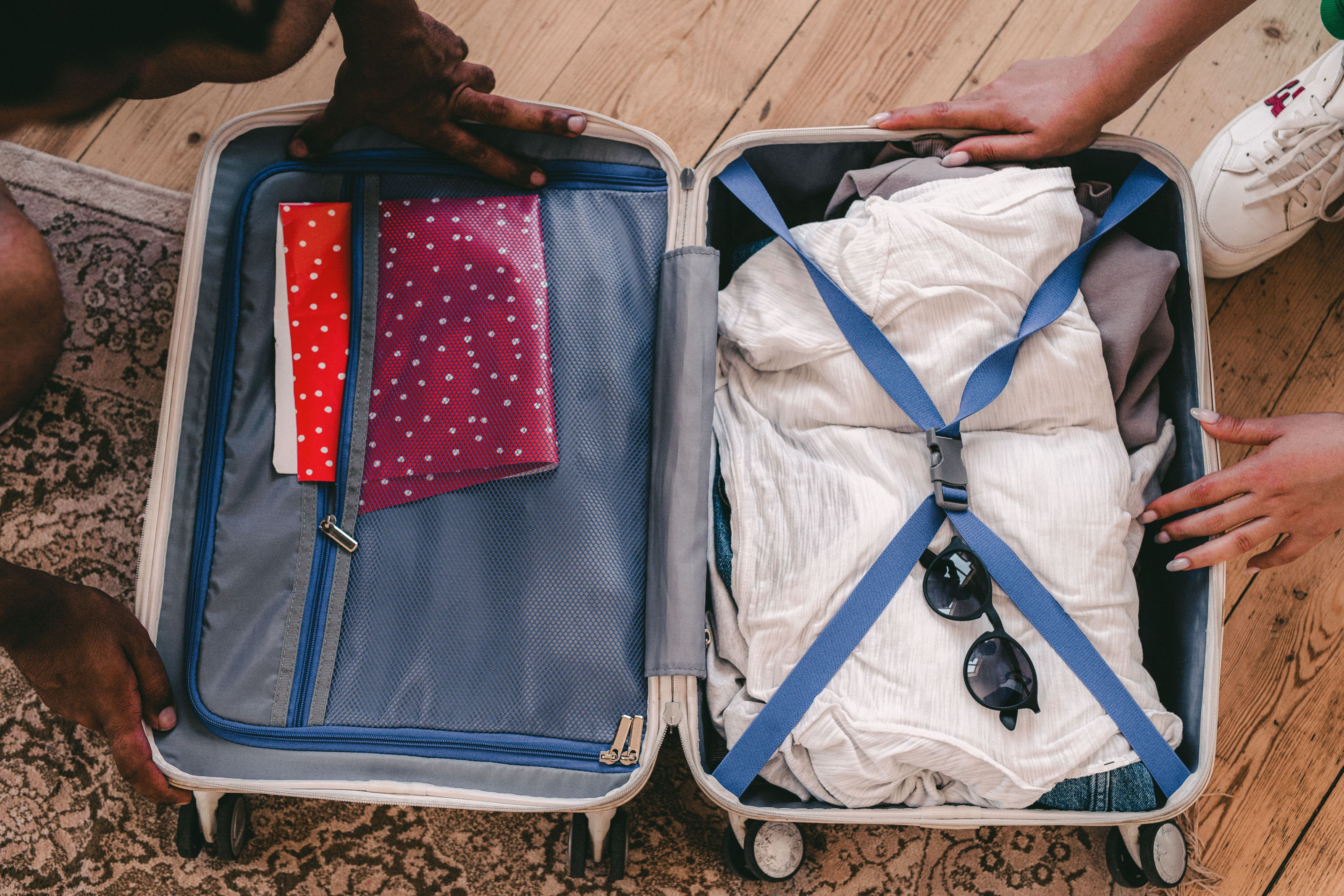
Pack for temperature swings, not for one climate
A single day on safari can start at 6am near freezing on the crater rim at Ngorongoro, 2,200 metres up, and end at 30°C on the valley floor by mid-morning. Bwindi’s gorilla trekking sectors range from 1,160 to 2,607 metres, and Mgahinga climbs as high as 4,127 metres on its volcano slopes. Layers matter more than any single garment: a base layer, a fleece or light jumper, and a proper rain jacket cover almost every situation you’ll actually encounter.
Colour matters more than people expect
Neutral tones — khaki, olive, grey, stone — are the standard for a reason beyond blending in for photos. Tsetse flies, present in several savannah parks including Queen Elizabeth and Murchison Falls, are strongly attracted to dark blue and black, and a bite is genuinely unpleasant. Bright colours and white both have their own drawbacks: bright colours can spook wildlife at close range, and white shows dust and mud within an hour of walking anywhere.
What gorilla trekking specifically requires
- Sturdy, broken-in hiking boots with real ankle support and grip — not trainers, not new boots straight out of the box.
- Long trousers tucked into socks, and a long-sleeved shirt, both to protect against nettles and biting insects in dense forest.
- Gardening gloves, genuinely useful for pushing through thorny undergrowth without shredding your hands.
- A lightweight, packable rain jacket, since rainforest weather can turn with little warning in any month.
- Gaiters if you have them, to keep mud and biting ants out of your boots on longer treks.
What actually goes wrong if you skip these
Underdressing for gorilla trekking is the single most common regret reported by first-time trekkers. A four-hour muddy climb in trainers and shorts is a genuinely miserable experience, and it cannot be fixed once you’re on the trail. Overpacking, by contrast, mostly just means an uncomfortable bag — a much smaller problem.
General safari essentials
- A wide-brimmed hat and high-SPF sunscreen; equatorial sun is strong even on overcast days.
- Binoculars — a pair per person, not shared, since wildlife moments are often brief.
- Insect repellent containing DEET, applied consistently from dusk onward regardless of season.
- A portable phone charger or power bank; many camps run on solar power or generators with limited charging hours.
- A soft-sided duffel bag rather than a hard suitcase, essential if any part of the trip involves a light aircraft.
The 15kg rule that catches people out
Light-aircraft transfers between parks, common in Tanzania and increasingly in Uganda and Kenya, almost universally cap luggage at around 15 kg per person, including hand luggage, and require soft-sided bags because hard suitcases don’t fit the aircraft’s storage compartments. Confirm this limit with your operator before you pack, not at the airstrip, where excess luggage sometimes has to be left behind or shipped separately at extra cost.
What to actually leave at home
- Camouflage-patterned clothing, which is restricted or illegal for civilians in several East African countries, Uganda and Rwanda included.
- A hard-shell suitcase, if any leg of the trip involves a light aircraft.
- More than one or two “smart casual” outfits — most lodges are relaxed about dress, and the extra weight is rarely worth it.
- Excess electronics you won’t realistically use; charging capacity is limited at many camps, and simplicity wins.
A final practical note
Laundry service is available at most midrange and luxury lodges, often same-day, which means packing for 4–5 days of a trip rather than the full length is usually enough even on a two-week itinerary. It is one of the easiest ways to keep total luggage weight under control without leaving anything essential behind.
Zanzibar changes the list slightly
A beach extension at the end of a mainland safari calls for a different set of essentials layered on top of the safari list rather than replacing it: reef-safe sunscreen if visiting Jozani Chwaka Bay or snorkelling near coral, modest swimwear and a light cover-up for visiting Stone Town’s mosques and historic sites, and closed shoes for wandering Stone Town’s uneven alleyways rather than the sandals that work fine on a beach. Keep the safari layers packed separately from the beach layers so the transition between the two doesn’t mean repacking the whole bag.
What experienced guides actually carry themselves
Ask a long-time guide what they never leave at the lodge and the answers are consistent: a headlamp for early departures before sunrise, a printed or downloaded offline map since phone signal is unreliable in most parks, and a simple first-aid kit with blister plasters, antihistamines and rehydration salts. None of this is expensive or heavy, and all of it addresses the kind of small problem that otherwise derails an afternoon.


