

This is the category for travellers who want to be moving under their own effort for at least part of the trip, on foot, on a raft, or up a mountain, rather than watching the landscape go by from a vehicle window.
What It Is Like
Walking safaris put you on the ground with an armed ranger guide, reading tracks and approaching wildlife at a respectful distance and a human pace, a very different experience from a vehicle sighting. Multi-day mountain treks are a longer commitment, several days of steady climbing with porters and camp crew handling the logistics, and a summit attempt timed for early morning when conditions are most stable. A day on the Nile at Jinja is a shorter, sharper adventure, whitewater rafting through a series of named rapids below the river’s source.
Where It Works Best
Uganda’s Rwenzori Mountains National Park, the range that reaches Margherita Peak at 5,109 metres, offers everything from a short foothill walk to a full multi-day Rwenzori trek. Tanzania’s Mount Kilimanjaro, Africa’s highest point at 5,895 metres, and Kenya’s Mount Kenya National Park are both structured multi-day climbs with several route options; see our Kilimanjaro climb and Mount Kenya climb pages for how each is organised. Ethiopia’s Simien Mountains National Park rises to 4,543 metres at Ras Dashen and combines trekking with gelada monkey sightings along a dramatic escarpment; our Simien trek covers the standard routes. For something shorter, our walking safari and whitewater rafting at Jinja both fit into a day.
Best Time
The dry windows, roughly June to September and December to February, give the most stable conditions on all four mountain ranges and the clearest trail underfoot for walking safaris. Rafting on the Nile runs year-round, since river levels are managed rather than purely seasonal.
Who It Suits
Fit, motivated travellers who want a physical challenge alongside the wildlife side of a trip. Multi-day climbs demand real fitness and, on Kilimanjaro and Mount Kenya in particular, a sensible approach to altitude; walking safaris and the Jinja rafting day are far more accessible and suit most reasonably active travellers.

Aberdare & Mount Kenya Highland Trek
Seven highland days: Aberdare's moorland and tree hotel, then a Mount Kenya foothill trek through forest and heather.
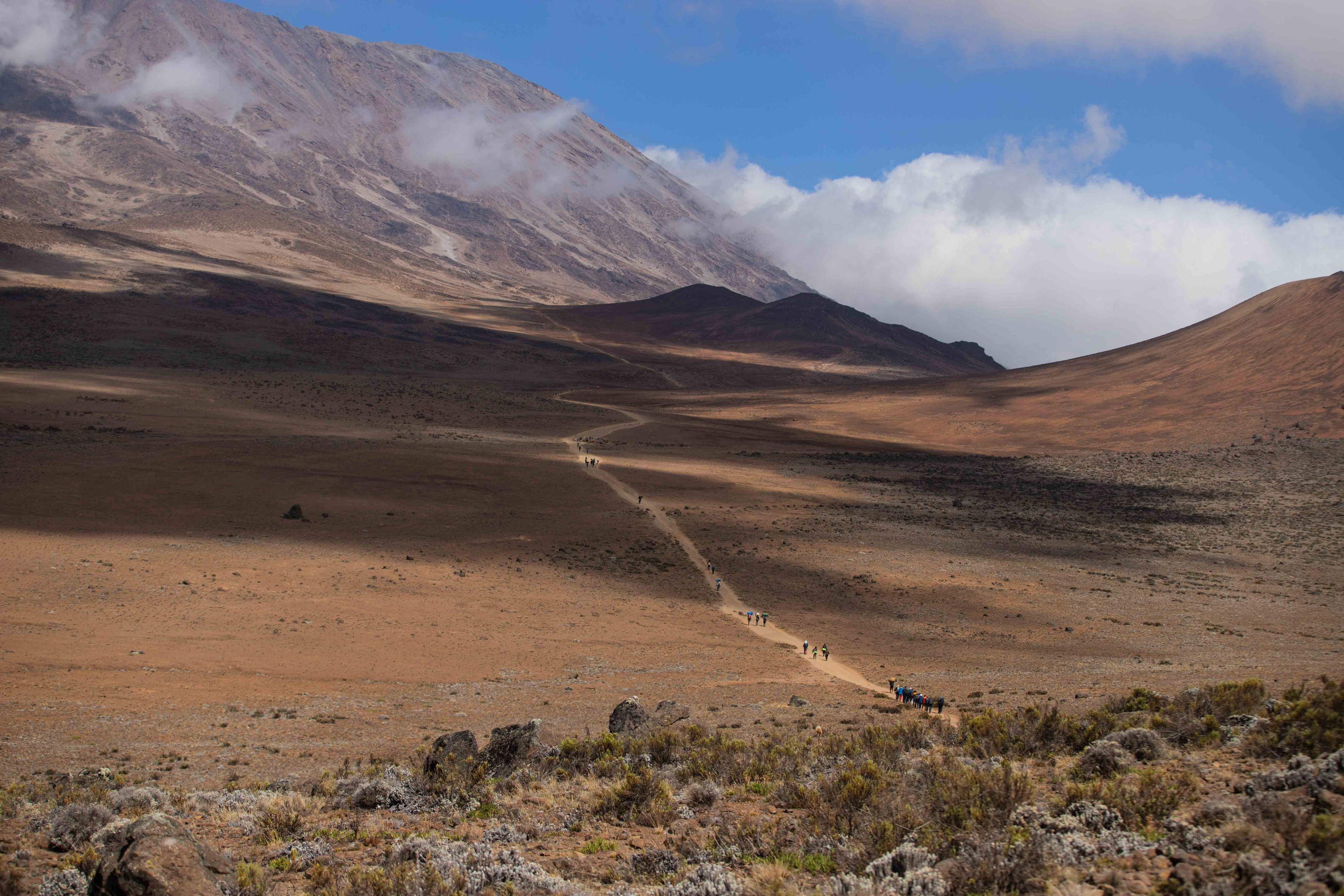
Marangu Route: Five Days, and Why It Isn’t the Easy Way
Kilimanjaro's Marangu Route in five days, hut-based throughout: the most comfortable option, and honestly the one with the lowest summit…

Machame to Zanzibar: Twelve Days, Mountain to Sea
Kilimanjaro's seven-day Machame Route, the mountain's most popular path to the summit, followed by five days between Stone Town and…
See the full hiking and trekking archive.
How We Plan It
For multi-day climbs, we build in proper acclimatisation days rather than the fastest possible route to the summit, since altitude, not fitness, is what actually turns climbers back. Porters, camp crew and permits are arranged as part of the package, and we are direct with you about how demanding a given route actually is. On Kilimanjaro, park fees alone typically account for roughly US$1,000 to US$1,200 of the total cost, which is worth knowing when comparing quotes between operators.
Crew are paid and tipped on a pooled basis on these climbs, roughly US$20 a day for a guide, US$12–15 for a cook and US$5–10 per porter, and we set out the expected total before you leave so it is not a last-minute calculation at altitude.
Tell us your fitness level and which route interests you through the tailor-made planner, no deposit needed to enquire.