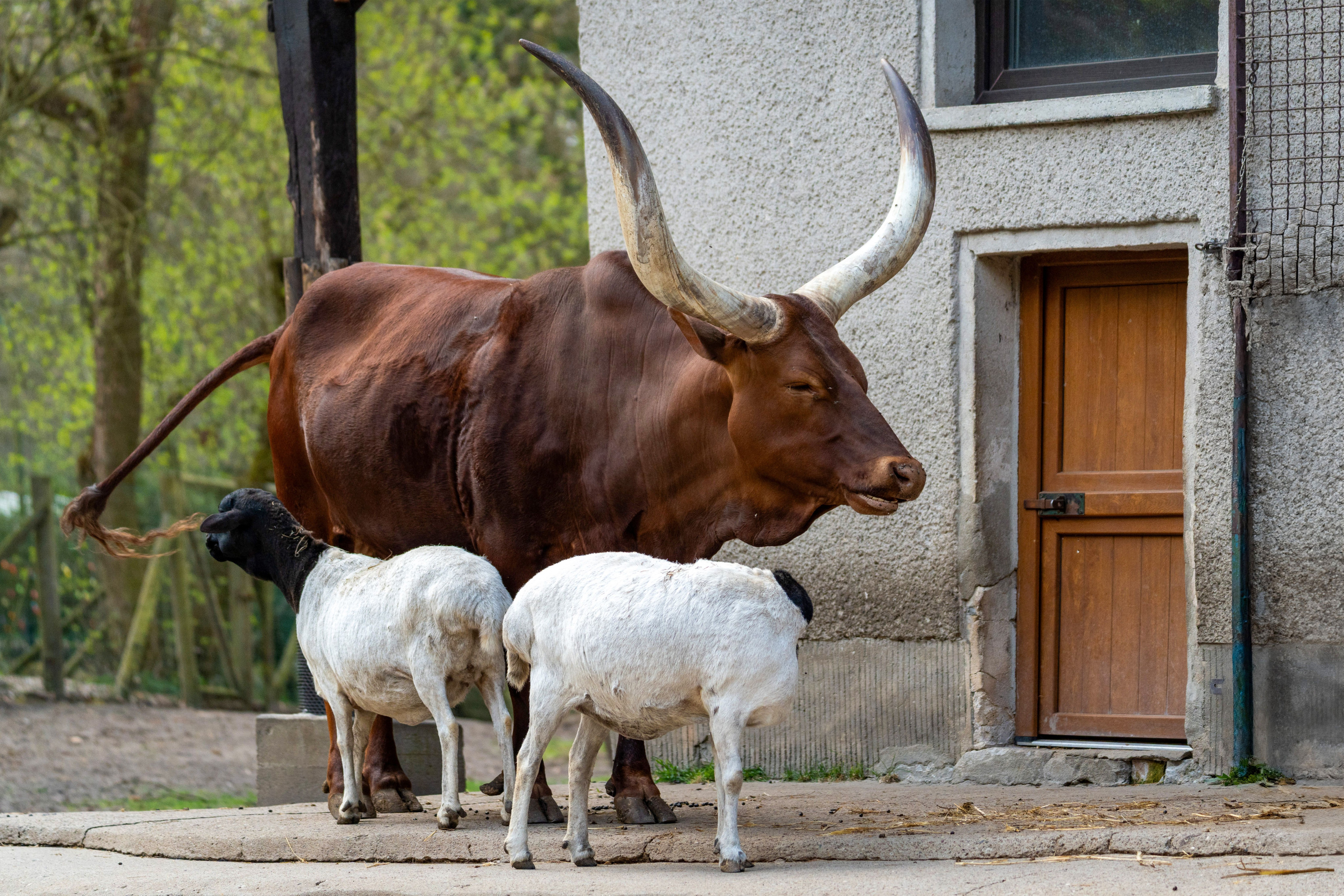
A long-horned Ankole bull stands calmly beside a simple rural homestead.

{ Tour }

Batwa Trails and Ankole Cattle Country

A seven-day trip pairing a Bwindi gorilla trek and Batwa cultural walks with the Ankole cattle-keeping country around Lake Mburo and Bunyonyi.

Duration7 Days / 6 Nights
Group size2 – 7 travellers
Best monthsJune – September, December – February
From$2,920 per person sharing

{ 01 }

The Trip in Short

Most Uganda itineraries treat culture as a half-day add-on to a wildlife trip. This one flips the emphasis, without dropping the wildlife altogether. It follows the Batwa, forest hunter-gatherers displaced when Bwindi and Mgahinga became protected parks in 1991, through cultural walks that explain what was lost and what has been rebuilt since, and it spends time in Ankole cattle country around Lake Mburo, where the long-horned Ankole cattle remain central to local identity and economy.

The gorilla trek still sits at the centre of the trip, since it would be strange to visit Bwindi and skip it, but the framing throughout is about the people who have lived alongside this landscape rather than only the animals in it.

It suits travellers who found a standard safari a little thin on human context, and who want the wildlife alongside a clearer picture of the communities whose land it was and, in a different form, still is.

Park entry fees and gorilla and chimp permits in Uganda are set by the Uganda Wildlife Authority.

Highlights

  • Batwa cultural walk in Bwindi's Mukono community
  • Gorilla trekking in Bwindi Impenetrable Forest
  • Ankole long-horned cattle herding country
  • Walking safari and boat cruise at Lake Mburo
  • Island visit and Batwa history at Lake Bunyonyi

{ 02 }

Where You Go, Stop by Stop

1
Day 1
Entebbe to Lake Mburo
2
Day 2
Mburo walking safari and Ankole cattle visit
3
Day 3
Transfer to Bwindi
4
Day 4
Gorilla trekking
5
Day 5
Batwa cultural walk
6
Day 6
Transfer to Lake Bunyonyi
7
Day 7
Bunyonyi island visit and departure

{ 03 }

Day by Day Itinerary

Day 1: Entebbe to Lake Mburo

A drive west of around three and a half hours to Lake Mburo National Park, arriving in time for lunch and an easy afternoon.

Day 2: Walking safari and Ankole cattle visit

A morning walking safari among zebra and antelope, then an afternoon visit to a local Ankole homestead to see the long-horned cattle that define pastoral identity across this part of Uganda and hear how herding practices have adapted around the park's boundaries.

Day 3: Transfer to Bwindi

A drive further west into the hills of the southwest, arriving at Bwindi Impenetrable National Park in the afternoon.

Day 4: Gorilla trekking

A briefing at park headquarters, then a trek of two to six hours to find a habituated gorilla family, followed by a full hour of observation.

Day 5: Batwa cultural walk

A half-day walk led by Batwa guides through forest their community once called home, before their displacement when Bwindi and Mgahinga were gazetted as national parks in 1991, covering traditional hunting and gathering methods, medicinal plants and a demonstration of fire-making by friction.

Day 6: Transfer to Lake Bunyonyi

A short drive of around two hours to Lake Bunyonyi, arriving in time for an afternoon at leisure by the water.

Day 7: Bunyonyi island visit and departure

A morning canoe visit to one of the lake's islands with a resettled Batwa community, followed by the drive back north to Entebbe, roughly eight hours with a lunch stop.

{ 04 }

What the Price Covers

Included

  • 6 nights' accommodation, full board
  • Gorilla trekking permit ($800)
  • Batwa cultural walk fee
  • Ankole homestead visit
  • Lake Mburo walking safari with armed ranger
  • Private vehicle and driver-guide throughout

Not included

  • International flights and Uganda visa
  • Porter fees on the gorilla trek
  • Alcoholic drinks
  • Tips
  • Travel insurance

{ 05 }

Before You Book

Who runs the cultural visits on this itinerary?

Community-based organisations run by the Batwa and Ankole communities themselves rather than third-party operators, so fees go more directly to the people hosting the visit.

Is the Batwa cultural walk respectful, or does it feel staged?

It is presented honestly as cultural tourism rather than daily life, since the Batwa were displaced from the forest decades ago; the better community-run programmes are candid about that history rather than romanticising it.

What are Ankole cattle known for?

Their distinctive long, thick horns, sometimes over a metre across, and their central place in Banyankole culture as a measure of wealth and social standing rather than purely livestock.

Is this trip lighter on wildlife than a standard safari?

It includes one gorilla trek and one walking safari, so it is not a pure cultural tour, but the emphasis and pacing favour the cultural stops over additional game drives.

{ Enquiry }

Plan this safari

A tailor-made safari

Tell us a little about your group and dates. A planner replies within one working day, and there is no deposit to enquire.