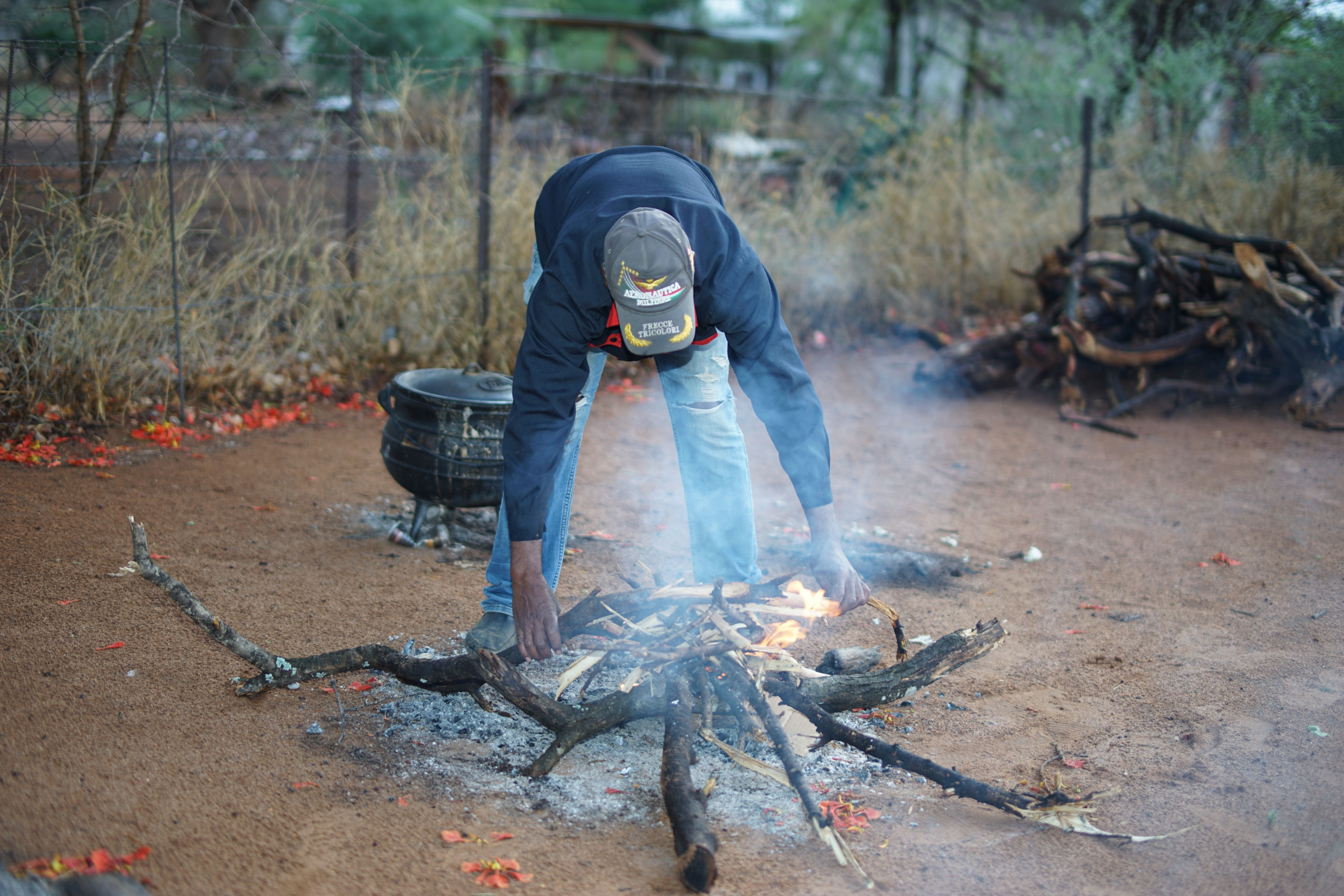
A man tends a small outdoor fire using traditional methods at the edge of a forest clearing.

{ Experience }

The Batwa Cultural Experience

A half-day visit with Batwa communities near Bwindi, sharing forest knowledge and history following their 1991 eviction from the forest.

DurationHalf day (2–3 hours)
WhereCommunities near Bwindi Impenetrable and Mgahinga Gorilla National Parks, Uganda
ExertionEasy
From$35

{ 01 }

The Experience

The Batwa are one of Central Africa’s oldest forest-dwelling peoples, with a way of life built around Bwindi and Mgahinga’s forests going back many generations. When Bwindi and Mgahinga were gazetted as national parks in 1991 to protect the mountain gorilla, the Batwa were evicted from the forest with no land rights and, for many families, no meaningful compensation — a hard fact that sits underneath any visit here and is worth understanding plainly rather than glossing over.

This experience, developed and run with Batwa community members themselves, is a way for some of that community to share their forest knowledge and cultural practice directly, and for the income from visits to support families for whom the forest is no longer home in the way it once was.

Park entry fees and gorilla and chimp permits in Uganda are set by the Uganda Wildlife Authority.

Highlights

  • Led by Batwa community members, not external performers
  • Forest survival skills: fire-making, hut-building, plant use
  • Traditional song and dance as part of the visit
  • Honest historical context on the 1991 eviction from Bwindi and Mgahinga
  • Direct income support for Batwa families
  • Often paired with a gorilla or golden monkey trek on the same trip

{ 02 }

How the Day Unfolds

Welcome and introduction

Visitors are welcomed by Batwa community members, who introduce themselves and give an honest account of their history in this forest and their displacement from it in 1991 when the parks were created to protect the gorillas — context that shapes the rest of the visit rather than a footnote to it.

Forest skills demonstration

Community members demonstrate skills once central to daily forest life: fire-making by friction, temporary hut construction, and identification of edible and medicinal plants, explained by people who learned these skills as children rather than performers reciting a script.

Traditional song and dance

A performance of traditional songs and dances follows, often inviting visitor participation, presented as a living cultural practice rather than a museum piece.

Conversation and departure

The visit typically closes with time for questions and informal conversation, an opportunity to hear directly about the community's current circumstances and the ways tourism income is or is not helping, rather than leaving that context unaddressed.

{ 04 }

Included, and What to Bring

Included

  • Guided visit with Batwa community hosts
  • Cultural demonstration and performance
  • Direct community fee contribution

Bring

  • Cash for any craft purchases, which support the community directly
  • Respectful, open curiosity rather than a checklist approach to photography
  • Comfortable, casual clothing
  • Sun protection

{ 05 }

Permits and Good to Know

Visits typically cost around $35 per person, with a meaningful share going directly to the Batwa community running the programme; this is not a national park fee but a community-based tourism fee, and travellers should ask their operator specifically how proceeds are distributed if this matters to them.

What actually happened to the Batwa in 1991?

Bwindi and Mgahinga were gazetted as national parks that year to protect the mountain gorilla population, and Batwa communities who had lived in and around this forest for generations were evicted, largely without land rights or adequate compensation — a history worth understanding plainly before the visit.

Is this respectful, or does it feel exploitative?

Reputable versions of this experience are organised with and led by Batwa community members themselves, with income directly supporting families; ask your operator how the programme is structured and who benefits before booking.

Can I take photographs?

Generally yes, with the same courtesy you would extend anywhere — ask before close-up portraits and follow the guidance of your hosts.

Can this be combined with gorilla trekking?

Yes, most visitors add this as a half-day activity around a Bwindi or Mgahinga gorilla or golden monkey trek.

{ Enquiry }

Plan this safari

A tailor-made safari

Tell us a little about your group and dates. A planner replies within one working day, and there is no deposit to enquire.