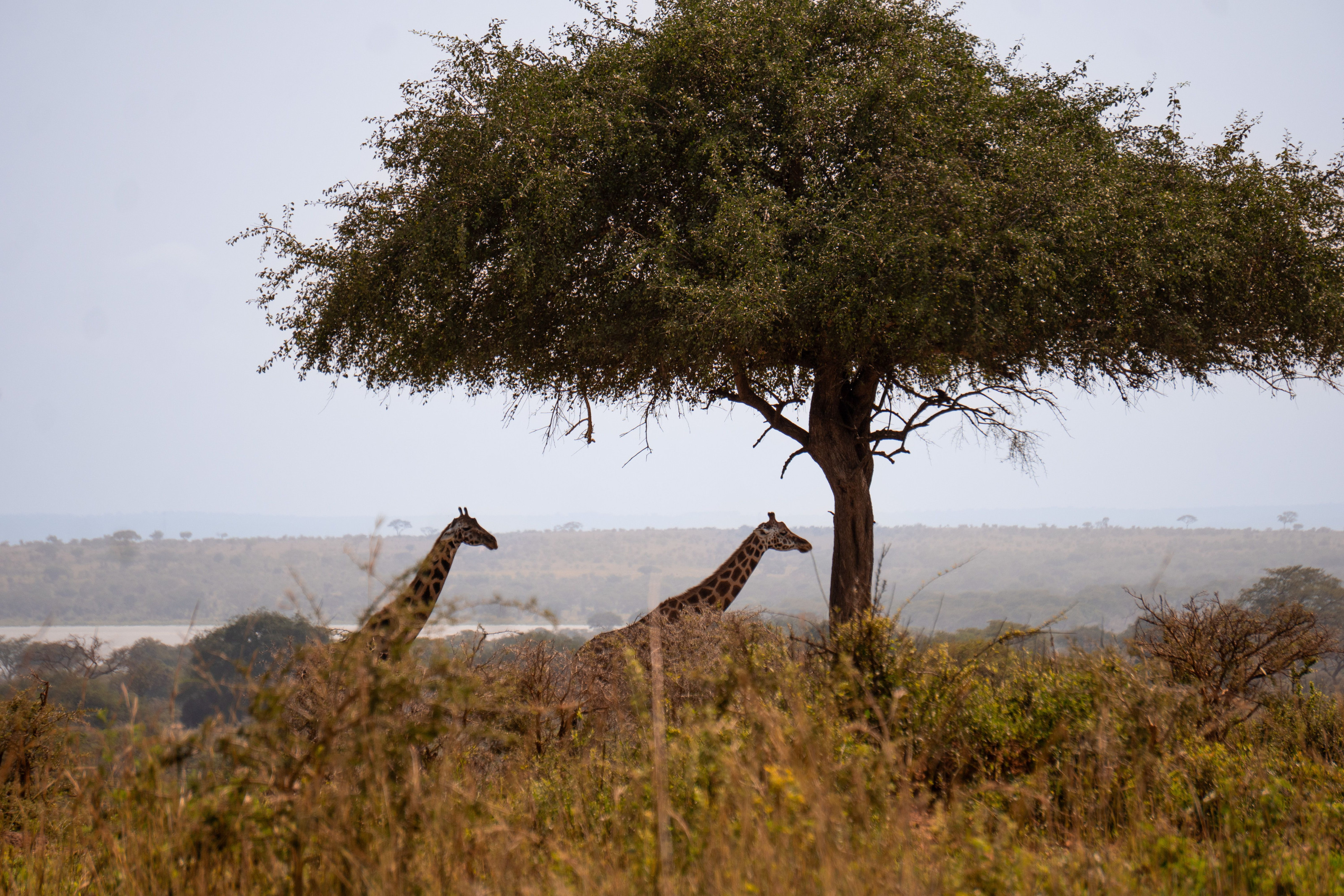
Steam rising from a hot spring surrounded by lush rainforest greenery under a clear sky.

{ Destination }

Semuliki National Park

A lowland Congo Basin rainforest on Uganda's DRC border, with steaming hot springs and Central African bird species found nowhere else in the country.

Best monthsJune to September and December to February
Stay1 – 2 nights
CountryUganda
TypeNational Park

{ 01 }

Why Go

Semuliki is an extension, geographically and biologically, of the Democratic Republic of Congo’s vast Ituri Forest — a lowland rainforest sitting in the floor of the Albertine Rift rather than on its escarpment, which makes it warmer, flatter and botanically distinct from Uganda’s other forest parks. The result is a bird list heavy with Central African species that turn up nowhere else on a Uganda itinerary, the kind of park that draws serious birders and relatively few general safari travellers.

Beyond birding, Semuliki holds hot springs at Sempaya, where the ground itself steams, and a Batwa community with links to the forest similar to those found around Bwindi and Mgahinga further south. The forest holds 305 recorded tree species, 125 of them found locally and nowhere else in Uganda, giving it a botanical significance that outweighs its relatively low profile.

Semuliki sees far fewer visitors than the primate parks to its south or the savannah parks to its east, largely because it offers neither gorillas nor big game in volume. What it offers instead is a genuinely different ecosystem within Uganda’s borders, reachable via Fort Portal on the same route that serves Kibale and Rwenzori.

One to two nights suits a Semuliki visit well, usually combined with Kibale or a Rwenzori foothills trip given the shared access route through Fort Portal.

Park entry fees and gorilla and chimp permits in Uganda are set by the Uganda Wildlife Authority.

Highlights

  • Birding for rare Congo-Ituri forest species
  • Sempaya hot springs
  • Batwa cultural encounters
  • Forest walks among 305 recorded tree species
  • Night walks for nocturnal forest species
  • Easy pairing with Kibale or the Rwenzori foothills via Fort Portal

{ 02 }

What You Are Likely to See

White-throated blue swallowYellow-footed flycatcherCongo serpent eagleBlack-wattled hornbillLyre-tailed honeyguideForest elephant (occasional)Red-tailed monkeyDe Brazza's monkey

{ 03 }

Facts and Seasons

Tree species
305, with 125 found only locally in Uganda
Landscape
Lowland rainforest, an extension of DRC's Ituri Forest
Landmark
Sempaya hot springs
Access
Via Fort Portal, or via Masaka, Mbarara and Kasese
Setting
Rift Valley floor, warmer and flatter than Uganda's other forest parks

Season by season

June to September

Drier and firmer underfoot for forest walking and the trail to the hot springs.

December to February

A second, similarly dry window.

March to May

The long rains, adding humidity and mud but not closing the park.

October and November

Shorter rains, quiet trails and reliable birding.

{ 04 }

Getting There

Semuliki is most commonly reached via Fort Portal, itself linked to Kampala by a 5–6 hour drive, with the park a further hour or so beyond town.

An alternative route runs via Masaka, Mbarara and Kasese for travellers coming from Queen Elizabeth or the southwest.

{ Enquiry }

Plan this safari

A tailor-made safari

Tell us a little about your group and dates. A planner replies within one working day, and there is no deposit to enquire.