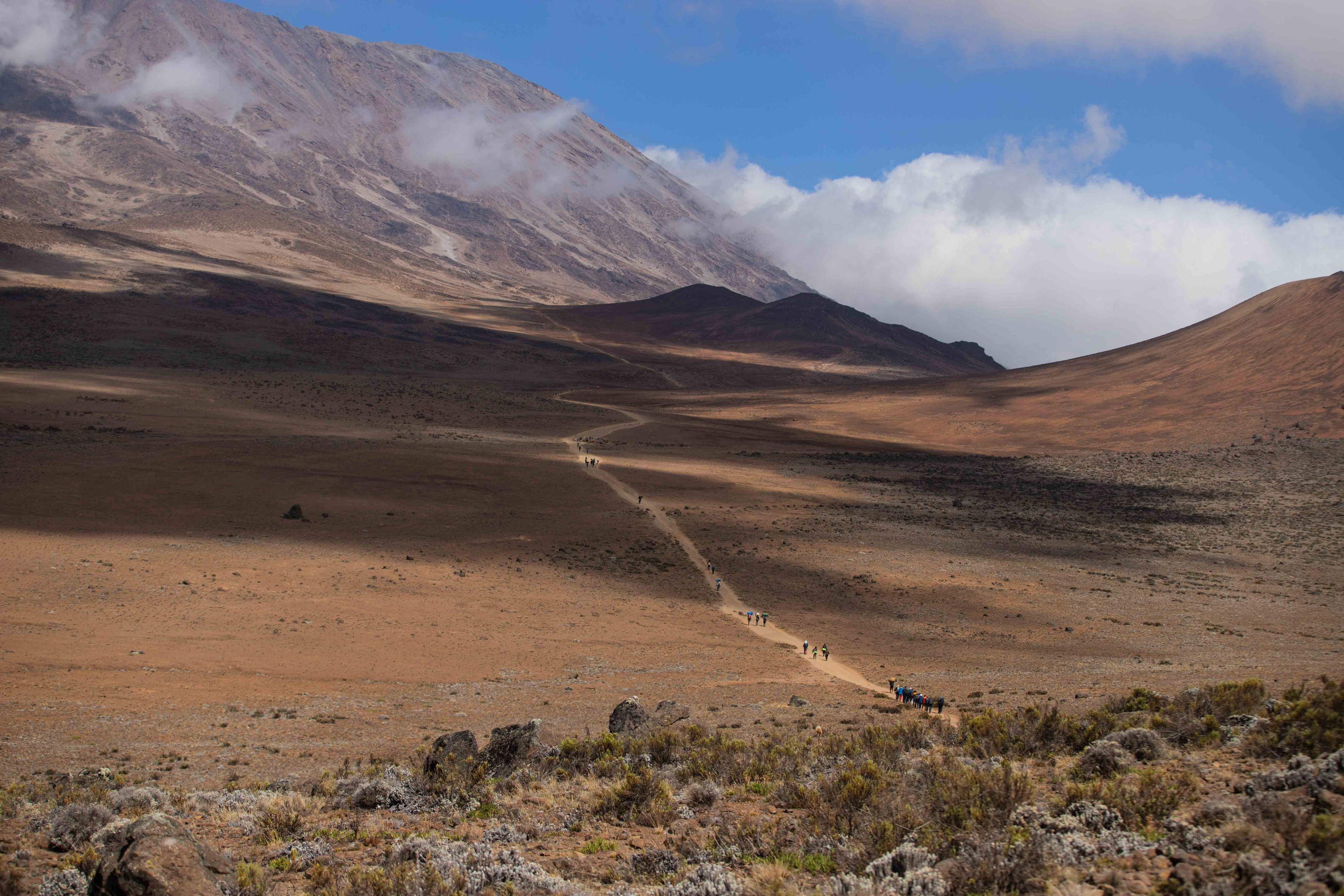
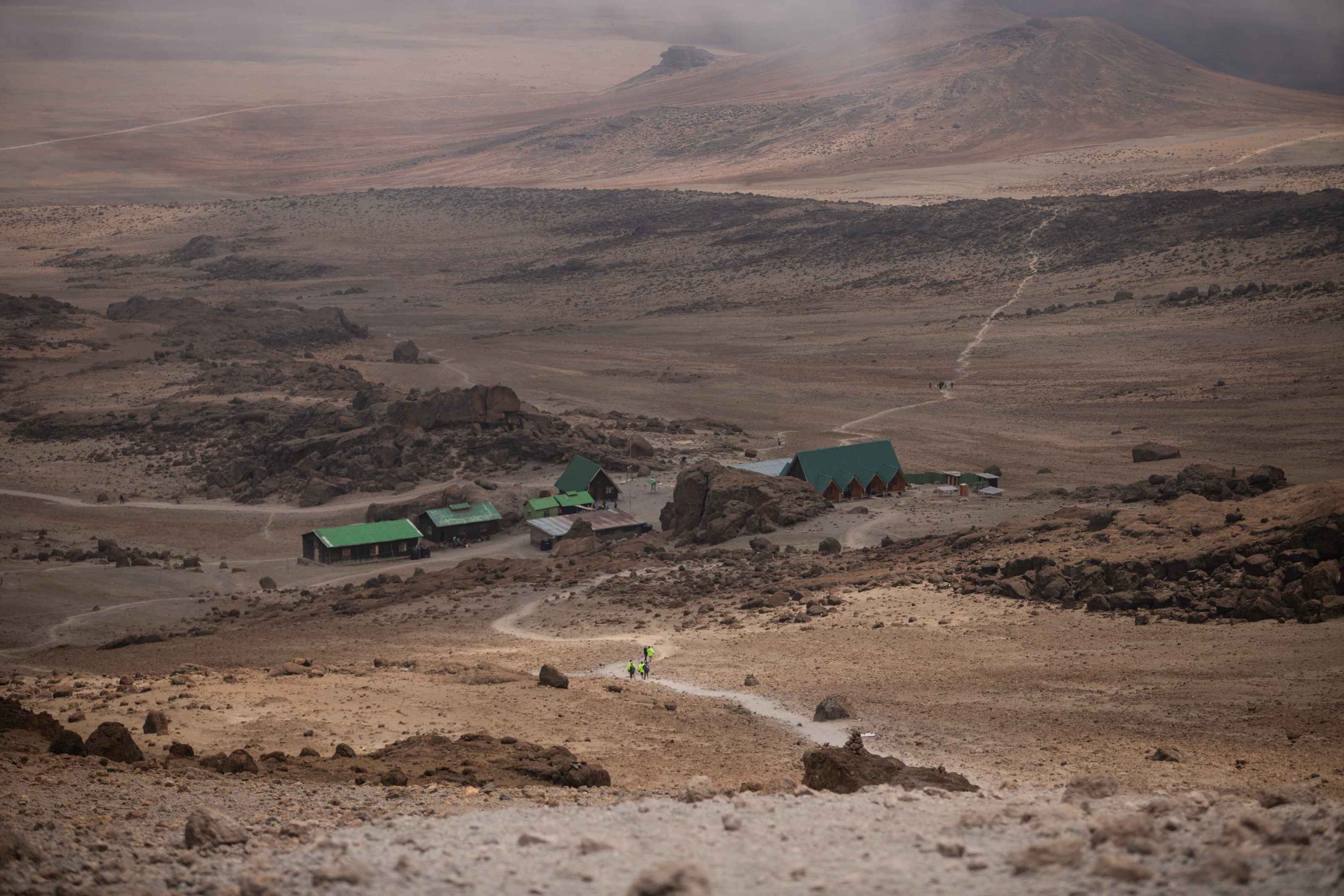
Trekkers approach a remote mountain camp across a wide, rugged high-altitude plateau.

{ Tour }

Lemosho Route: Nine Days to the Roof of Africa

Kilimanjaro's eight-day Lemosho Route, starting on the mountain's quieter western flank: the widest scenic range of any route and success rates around 85–90%.

Duration9 Days / 8 Nights
Group size2 – 10 climbers
Best monthsJune – October and December – February
From$3,480 per person sharing, including park fees

{ 01 }

The Trip in Short

Lemosho starts on Kilimanjaro’s quieter western side and takes eight days to reach the summit, crossing the Shira Plateau before joining the southern circuit route for the final approach. That extra length is the entire point: more days at altitude before the summit push means measurably better acclimatisation, and Lemosho’s eight-day itineraries post some of the highest success rates on the mountain, typically in the 85–90% range.

It is also, by common agreement among guides who have walked all of Kilimanjaro’s routes, the most scenically varied: rainforest, the open Shira Plateau, alpine desert and a summit night that most Lemosho climbers actually finish.

Park fees and rules on the Tanzanian mainland are set by Tanzania National Parks (TANAPA).

Highlights

  • Eight trekking days with a full extra acclimatisation day built in
  • Quiet western approach through the Shira Plateau
  • Rainforest, moorland, alpine desert and glacier views in one route
  • Summit success rates around 85–90%, among the highest on the mountain
  • Uhuru Peak at 5,895 metres via the Barafu summit approach
  • Smaller group sizes than the more crowded Machame trailhead

{ 02 }

Where You Go, Stop by Stop

1
Day 1
Arrival, Moshi
2
Day 2
Londorossi Gate to Mti Mkubwa Camp
3
Day 3
Mti Mkubwa to Shira 1 Camp
4
Day 4
Shira 1 to Shira 2 Camp
5
Day 5
Shira 2 to Barranco Camp
6
Day 6
Barranco to Karanga Camp
7
Day 7
Karanga to Barafu Camp
8
Day 8
Summit, descend to Mweka Camp
9
Day 9
Descend to Mweka Gate, transfer to Moshi

{ 03 }

Day by Day Itinerary

Day 1: Arrival in Moshi

Airport transfer, gear check and route briefing at your hotel, with an early night ahead of the trek.

Day 2: Londorossi Gate to Mti Mkubwa Camp

A drive to the western trailhead, then a gentle first day through montane rainforest to Mti Mkubwa (‘big tree’ in Swahili) camp at around 2,850 metres.

Day 3: Mti Mkubwa to Shira 1 Camp

Climbing out of the forest onto the edge of the Shira Plateau, an ancient collapsed volcanic caldera, with camp pitched at roughly 3,500 metres.

Day 4: Shira 1 to Shira 2 Camp

A gentler day crossing the plateau itself, with Kibo's summit dome visible ahead for long stretches: good acclimatisation walking at a modest altitude gain.

Day 5: Shira 2 to Barranco Camp

A climb over the Lava Tower at nearly 4,600 metres before descending to Barranco Camp: the classic ‘climb high, sleep low’ acclimatisation day that does much of the route's heavy lifting.

Day 6: Barranco to Karanga Camp

A short but steep morning up the Barranco Wall, considered more exciting than technically difficult, followed by an easier afternoon to Karanga Camp.

Day 7: Karanga to Barafu Camp

A shorter day to Barafu (base camp for the summit push), with an early dinner and an attempt at sleep before a midnight start.

Day 8: Summit and Descent

A midnight departure for Stella Point and on to Uhuru Peak at 5,895 metres for sunrise, followed by a long descent all the way to Mweka Camp.

Day 9: Descend to Mweka Gate

A final few hours through the forest to Mweka Gate, certificates issued, and transfer back to Moshi.

{ 04 }

What the Price Covers

Included

  • Kilimanjaro National Park fees and rescue fees
  • Camping equipment and mess tent
  • Mountain guides, porters and cook
  • All meals on the mountain
  • Airport transfers in Moshi or Arusha
  • Oxygen and basic first-aid kit carried by guides

Not included

  • International flights and visas
  • Travel and medical insurance, including evacuation cover
  • Personal climbing gear and clothing hire
  • Tips for guides, porters and cook
  • One night pre-climb hotel stay if arriving early

{ 05 }

Before You Book

Why does Lemosho have a higher success rate than Marangu?

Simply more days at altitude before the summit push: Lemosho's eight trekking days give your body more time to adapt than Marangu's standard five, and the effect on success rates is well documented.

How cold does it get at Barafu Camp?

Temperatures regularly drop below freezing overnight at 4,600 metres, and summit night itself can feel considerably colder with wind chill.

Is Lemosho more expensive than Machame?

Slightly, mainly because of the extra day and the longer western approach drive, but the gap is modest relative to the improved odds of actually reaching the summit.

Do we camp the whole way?

Yes. Unlike Marangu, Lemosho has no hut accommodation; a full camping setup with mess tent and sleeping tents is provided throughout.

{ Enquiry }

Plan this safari

A tailor-made safari

Tell us a little about your group and dates. A planner replies within one working day, and there is no deposit to enquire.