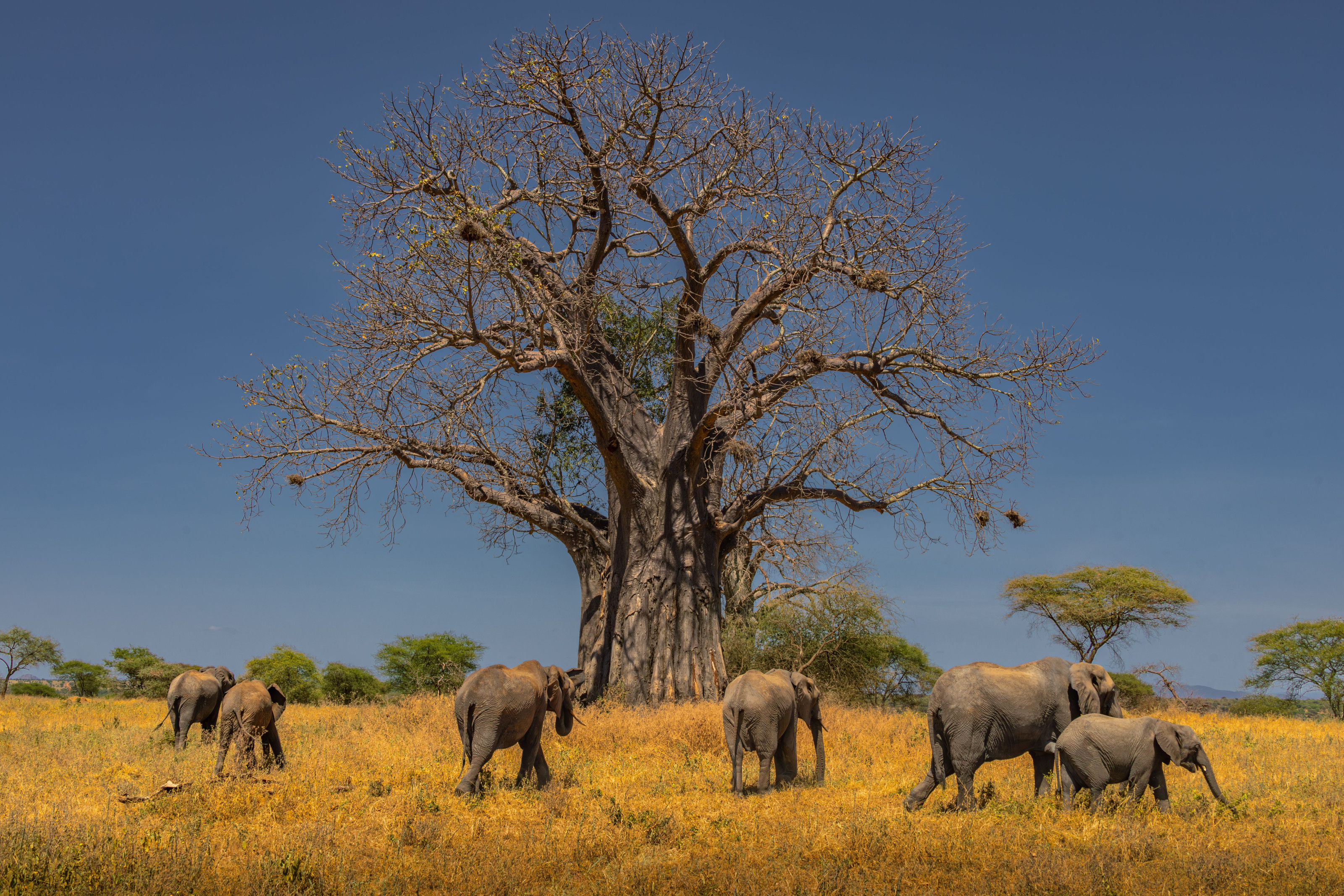
Tarangire is built around one river and one tree. The Tarangire River is the only permanent water source for miles in the dry season, and it pulls elephant herds toward it in numbers that can run to several hundred animals in a single group by August or September — among the largest gatherings anywhere on the continent. Ancient baobabs, some centuries old, stand scattered across the landscape in a way that makes Tarangire immediately recognisable in photographs even without the elephants in frame.
Tarangire became a national park in 1970 and holds a wider dry-country species list than its neighbours: oryx, gerenuk and greater kudu turn up here more reliably than in the wetter Serengeti or Ngorongoro, alongside a healthy population of African wild dog in a landscape that suits their hunting style. Night game drives, permitted in parts of the park, add a chance at nocturnal species rarely seen on daytime routes.
Birders do well here too, with 500-plus species recorded including ostrich and the striking yellow-collared lovebird, and the park’s proximity to Arusha — about 118 km, a two-to-three-hour drive — makes it an easy first or last stop on a northern-circuit safari.
Two to three nights allows both a proper game drive through the river corridor and a quieter exploration of the drier surrounding bush, and Tarangire pairs naturally with Lake Manyara given the short distance between them.
Park fees and rules on the Tanzanian mainland are set by Tanzania National Parks (TANAPA).